This paper describes The Learning Theorie and second language acquisition and fac-tors that affect second language acquisition and the main point of this writing is dis-cussing contributing factors in second language acquisition such as motivation, attitude, age, intelligence, cognitive style, and personality. Some factors are said to be dominant and some others are being equal but each of them gives different contribution for the success or the failure of second language acquisition. It is believed that every normal child, given a normal upbringing, are successful in the acquisition of their first language. However, experience shows that some of them success variedly in acquiring their second language due to the factors influencing the process of second language acquisition.
WHAT IS LEARNING?
Learning means the act, process, or experience of gaining knowledge or skill that brings change in behavior resulted from reinforced practice or experience.
An example of learning is a student understanding and remembering what they’ve been taught.
THEORIES OF LEARNING
Behaviorism: Current of Psychology that fervently defends the idea of the scientific method, because in itself this school is purely scientific and part thanks to the Wundt base that brings science back to the psychological field. The greatest exponents of this current are Messrs. Pavlov, Watson and Skinner, the object of study that this school possesses, clearly the behavior of individuals in a stimulus and response environment, since they see this aspect because it is measurable.
Is based on the idea that knowledge is independent and outside the student. In the mind of a behaviorist, the student is a blank board that should receive the information he must learn. Behaviorism involves repeated actions, verbal reinforcement and incentives to participate. It is excellent for setting rules, especially for behavior management.
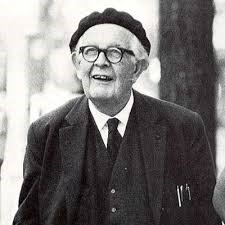
Cognitivism: Piaget’s theory of cognitive development explains how a child constructs a mental model of the world. He disagreed with the idea that intelligence was a fixed trait, and regarded cognitive development as a process which occurs due to biological maturation and interaction with the environment
Unlike behaviorism, cognitivism focuses on the idea that students process the information they receive instead of simply responding to a stimulus, as with behaviorism. In the theory of cognitivism, learning occurs when the student reorganizes the information, either finding new explanations or adapting old ones.

Constructivism: Lev Vygotsky is considered the precursor of social constructivism. From it, various social conceptions about learning have developed. Some of them broaden or modify their postulates, but the essence of the social constructivist approach remains.
Constructivism is based on the premise that we build the learning of new ideas based on our own knowledge and previous experiences. Students need to have a prior knowledge base for constructivist approaches to be effective.
Connectivism: George Siemens and Stephen Downes developed a theory for the digital age, called connectivism, denouncing boundaries of behaviorism, cognitivism, and constructivism. Their proposed learning theory has issued a debate over whether it is a learning theory or instructional theory or merely a pedagogical view.

It is a theoretical framework for understanding learning in a digital age. Emphasize how Internet technologies, such as web browsers, search engines, wikis, online discussion forums and social networks, contributed to new learning avenues.
Learn a Second Language refers to:
the process by which people learn a second language. Second-language acquisition is also the scientific discipline devoted to studying that process. The field of second-language acquisition is a sub discipline of applied linguistics, but also receives research attention from a variety of other disciplines, such as psychology and education.
FACTORS INFLUENCE SECOND LANGUAGE.
• Motivation: It is an important factor that can greatly influence the achievement of the acquisition of a second language or a foreign language by students.
• Motivation comes in two forms; integrative or instrumental


Integrative: The student studies a language because he is interested in the people and culture of the target language or in order to communicate with people from another culture who speak it.
Instrumental: A student’s goals for learning the second idiom indicators are functional and useful, for example, need the language to get a better job, pass exams.

• First language experiences: Indicates that native language skills can influence the acquisition of the second language. Vocabulary, pronunciation, and grammar, as well as language structure and use.
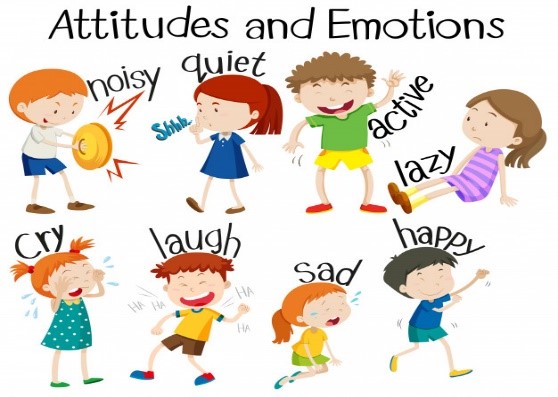
Learners who have acquired general know ledge and experience are in a strong position to develop a new language than these who haven’t. The student, for example: Who has already lived in 3 different countries and been exposed to various language and cultures has a stronger base for learning a further language than the student who hasn’t had such experiences.
• Language distance and attitude: are the attitude which speakers or different language have toward other’s language or to their own language. Expression of positive or negative feelings toward a language may reflect impression of linguistic difficulty or simplify, ease or difficulty of learning, degrees of important, social status, etc. It is obvious that learners who have positive attitudes learn more, but also learners who Lear well acquire positive attitudes.

• Access to the language: Access to the language allows people with limited English proficiency to use the technology services such as programs, applications, books or classes to learn the English language.

• Age of acquisition: It is generally believed that children are better at language acquisition that adults. However, only the studies conducted in naturalistic learning setting provide that evidence that supports this assumption.
Personality and learning styles:
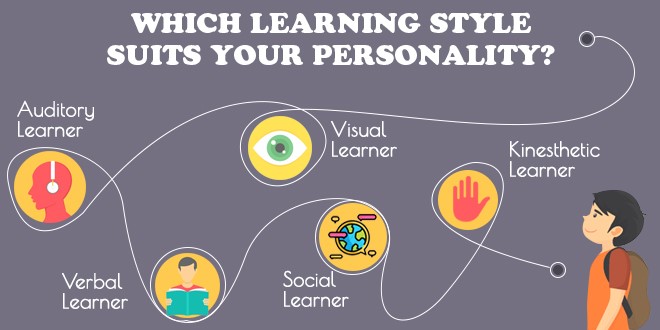
Personality has been described as set of features that characterize and individual. Some of them have been found as benefits while the others as an obstacle in learning a second language. The most important personality factors are: Introversion/extroversion, self-esteem, risk-taking, anxiety and empathy.
Learning Styles: It is particular way in which a learners tries to learn something. Some learners may what explanations for grammatical rules (audio learners), some may feel writing down words and sentences help them to remember (kinesthetic learners).
• Peers and Role Models: Peer interaction can facilitate acquisition in role plays and discussion tasks, peer interaction can be defined as “any communicative activity carried out between learners, where there is minimal or no participation from the teacher”.
The role models can have a considerable influence on the configuration of people’s values, attitudes and beliefs.
Example: many take as a model to follow its teachers in this case it would be a teacher of English that motivates them to learn the language through his experience.

• Quality of instruction: The quality of foreign language teaching is influenced not only by the knowledge of the language and the method of the teacher, but also by the understanding of modern trends that help the appropriate practical changes. Means that the teacher can effectively engage students in the learning process and relay relevant knowledge.

IN CONCLUTION
Learning a second language is a complex process because it requires not only learning grammar structures and acquiring vocabulary but also developing communication skills and an awareness of another culture. For example: Learning English has become a mandatory skill that many people should have. There are many reasons why people decide to study English as a second language, for example: to improve their financial situation, travel around the world, work abroad, communicate with people from different countries, etc. It is very common to see people from different ages enrolling in academies and universities which offer an enticing academic program designed to fulfill the students‟ necessities.

 Teaching Methods