Categorías
Sin categoría

Approach and methods

In the teaching of a second language, an infinite number of approaches and methods have been experienced to teach and learn, adapting and evolving in the best of its ways to teach. After knowing the philosophies and delving into the concepts of approaches, methods and techniques; We will specify the main approaches and methods for teaching a second language, showing its concept and application in education.

Approaches

Let’s summarize the concept of the previous previous blog:
One approach is the approach where it is reflected: how we want to teach and what we want to provoke with this teaching, stating our objectives, use of methods and skills to develop.

Structuralist Approach.

It focuses on the teaching of the origin and theory of the language.
Managing concepts, terms, contents, it would symbolize, hierarchical positions of the language, jargons, among others, to have specific knowledge of the language to be acquired, involving semantics, syntax, morphology and phonologies in its purest scientific branch.

It clarifies that language is understood as a social and abstract system, the elements of which must be analyzed based on their belonging to the system and from a synchronized perspective.

Pragmatic Approach

This approach shows language as a natural practice of the human being for its logical and at the same time abstract communication, making it an essential part of human life.

In this approach he bases his teaching on the extraction of theoretical knowledge for the development, production and practice of the same subject. That is, acquire theoretical knowledge through practice and discovery.

Applying it in ELT or SLT will indicate the constant use of the language in oral and written production, learning grammar, phonetic and lexical through the use of the language itself.

«Study of the choices that you make when you use Language»

Sociolinguistic Approach

A sociolinguistic approach involves society in language in one, allowing the study of the interaction of individuals through the use of language as the main means of transmitting thoughts, indications or ideas, faced barriers and linguistic varieties among the subjects exposed to the interaction.

The use of these linguistic varieties can be used to classify individuals into social, social or socioeconomic classes, although the same individual can use different varieties of the language according to the social situation and the context in which the interaction takes place.

Go to sociolinguistics includes dialectology, in the first instance, and then study the various combinations: you start from the self, but immersed in society.

This approach focuses on the acquisition of the language according to the exposure of the environment and the natural use of the language to teach, immerse and compel the daily and essential interactions, will allow to know, in an implicit way, theory through practice due to the natural need to communication.

Cognitive Approach

This approach is based on the thought or theory raised by Piaget, in which he states that the subject’s interaction with the environment allows him to acquire both theoretical and practical knowledge.

Stages of learning and different levels of acquisition, production and development capacity are established. It also states that the acquisition of language and thought are divided into different parts based on that we first think and then we speak. In his words he says that first the child is born and thinks, before developing his speech, that is, he first acquires the knowledge, processes it and then produces it.

ELT with a cognitive approach involves natural learning through exposure and environment to then produce speech, first think it and then produce it.

METHODS

Method is a way, form or way of doing something in a systematic, organized and / or structured way. Refers to a technique or set of tasks to perform a task.

In some cases, it is also understood as the usual way of doing something for a person based on experience, custom and personal characteristics.

Direct Method.

Direct Method was one of the most used methods to learn a language, in which the exposure of the language in learning is vital.
For this method certain characteristics must be met:

  • Exclusive use of the target language.
  • Teaching of vocabulary and structures of daily use.
  • Inductive teaching of grammar.
  • Development of oral communication skills in a progressive and graduated way through the exchange of questions and answers between teachers and students.
  • Oral introduction of new teaching content.
  • Use of demonstration, objects and drawings in introducing concrete vocabulary, and association of ideas in introducing abstract vocabulary.
  • Teaching of expression and oral comprehension.
  • Emphasis on pronunciation and grammar.

Practitioners of the direct method state that their approaches do not have a theoretical and methodological basis, since the method does not have a theory about the nature of language or a theory about the learning of it, nor does it have consistent methodological principles that serve as based on teaching techniques. His proposals have been difficult to apply in large groups or in public schools and his demand not to use the mother tongue has often ended in cumbersome and complicated explanations in the target language. Despite all these drawbacks, the direct method has offered important innovations in the field of teaching processes, has made visible the problems that existed in teaching and in the learning process and has opened the way to the teaching of languages foreign.

Advantage

  1. The focus is on oral practice. Therefore, pronunciation improves.
  2. When teaching vocabulary like words, idioms, this method is good.
  3. As there is a direct relationship between thought and expression, it helps students to have good fluency. Using the direct method, a teacher helps students to have a good command of English.
  4. In this method, the teacher goes from particular to general and from concrete to abstract.
  5. It makes teaching English easier and more enjoyable. A teacher uses various pictures / images to illustrate his point.
  6. This method creates the right environment to learn English.
  7. Since the Direct Method speaking unit is a sentence, students learn to speak complete sentences without hesitation. Then they gain confidence by mastering good English.

Disadvantages

  1. Due to excessive emphasis on oral practice, the other skills, namely reading and writing, are largely ignored.
  2. Average and below average students, especially in rural settings, find it difficult to understand the things taught through this method.
  3. This is an expensive method since the teacher must use some teaching aids.
  4. For this method, competent teachers must be there. But there is a shortage of good English teachers in the country. Incompetent teachers cannot use this method successfully.
  5. In the initial stage of learning, this method is not successful.
  6. Home history must also be compatible with foreign languages for this method. Students whose parents can speak English well get more benefits from this method.

Despite its shortcomings, this method is a good one. But the teacher must be able to modify it for the benefit of the whole class.

Grammar Translation Method.

This method focuses on teaching grammatical translation of the learning language into the native language, creating relationships between the acquired words with those learned, making differences between languages and clarifying similarities. This method is also known as the classical method, since it was used in the 15th century to learn Latin and basically, any other language, translating texts and learning the language through similar grammatical interpretations between languages.

For this method to be effectively fulfilled, it must meet certain characteristics:

  • mother tongue -teacher-centered
  • the vocabulary taught through wordlists and translation
  • reading of literary passages even at low levels, with reading comprehension questions
  • practice based on the translation of texts to and from MT
  • elaborate presentation of grammar rules
  • memorization of grammar rules and vocabulary
  • vocabulary exercises include antonyms and synonyms, definitions, etc based on words in reading texts
  • composition exercises based on topics from reading texts

Teacher’s Roles: It requires few specialized skills on the part of teachers because test of grammar rules and translation are easy to construct and be objectively scored. The facilitator main function is that of observation rather than corrective intervention in regards to the learners. Teacher are just guides because grammar translation deals with the memorization of rules, manipulation of rules, manipulation of the morphology, and syntax of the foreign language. It requires few specialized skills on the part of teachers because test of grammar rules and translation are easy to construct and be objectively scrod. The facilitator main function is that of observation rather than corrective intervention in regards to the learners.


Role of the students: Collaborative work is of s great importance, a real cooperative behavior from the learner, is required for the lessons. students are expected to remember an endless list of grammar rules and vocabulary, and to produce near-perfect translations. This method is a tedious experience and often creates frustration for students. Students begin the main activities and controls, he or she is the one who provides the course of the learning process and also the state of knowledge.

The Audiolinguistic Method

The Audiolinguistic Method is based on learning a language as a process of creating habits, with a cognitive approach through stimuli and responses to achieve an effective change in habits. Language skills are best achieved if the elements of the target language are presented first in oral production and then in written production, analogy provides a stronger foundation for language learning, and word meanings can only be presented in a cultural and linguistic context.

The role of the teacher is central, he will be the one who controls the class and models the teaching of the language, he will direct the way and rhythm of learning, he must also identify and correct the production of the students. The teacher must focus the students’ attention on different exercises and tasks, and must also choose the most appropriate situations to explain grammatical structures. The teacher must also use the target language in the language class, introduce, maintain and harmonize the learning of the four skills and direct the response in chorus of all or some students in the class, etc.

The role of the student is passive, responding to stimuli, this does not allow him to have control of what he is learning and he has to keep up the pace and style of learning that his mediator or teacher indicates. At the beginning they are not asked to be interactive because that can lead to error, they are asked to identify, repeat and memorize. At a more advanced level the student will be able to increase his vocabulary and get the correction before working on fluency.

Some characteristics of this method are:
• The exercises are used to teach structural patterns.
• Set phrases are memorized with a focus on intonation
• Grammatical explanations are kept to a minimum.
• The vocabulary is taught in context.
• Audiovisual aids are used.
• Focus is on pronunciation
• Correct answers are positively reinforced immediately

The audio-lingual method is still used today, although normally as part of individual lessons and not as the basis of the course. These kinds of lessons can be popular since they are relatively simple, from the teacher’s point of view, and the student always knows what to expect.

The Silent Way

The silent method comes from the idea of the cognitive approach, which proposes that learning is found in the environment, although they are not similar, it shares certain characteristics within which they define the learning process of a language as a reflection of culture and society, It also divides the weighing of the language.
The role that the teacher takes in this method is to be silent, he only interacts with his students when it is really necessary (Give directions, clarify doubts) otherwise he promotes the student’s self-monitoring

Role of the teacher

  • Remain silent
  • It is the facilitator of learning
  • Helps students to monitor themselves.

Role of the Student.

  • The teacher indicates, the student manages his knowledge.
  • He is forced to interact with his peers.
  • He is responsible for what he learns and how he learns it.

In this method, the correction must be given in the first instance among the students or the student’s own discovery, if the error is not identified after several attempts, the teacher interferes in his native language (merely to give explanations and at basic levels) fostered self-correction or cooperative correction, with last option teacher interaction.

In this method, the tools and techniques can vary from working groups in teams to the use of special tables such as Fidel’s painting or using colors, shapes or signs and thus attributing their meaning to words or phrases, of course these methods must be interactive only between students.

Those were the most common and most used approaches and methods today, add in the comments section other types of approaches or methods that you know / apply in your learning or teaching process.

Thank you very much for reading the blog, leave us your opinion in the comment box.
Categorías
Sin categoría

Methods, Approaches and Techniques.

The methods, approaches, and techniques of education are highly related to each other, simply because they are the points that tell the teacher, tutor, or professor, what to teach, How to teach and when to teach. In this way, the learning process is facilitated and streamlined, generating intellectually nutritious environments.

Methods:

One method is the systematized process that is used to reach an end. The purpose of education methods is to generate learning through the development of skills and abilities that allow the student to effectively develop basic and professional activities.

The methods in education will be defined according to the nature of the subject to be taught, it must also be adapted to the students’ learning style (It can be identified by knowing the theory of multiple knowledge), and as the main one, it must cover the main needs to meet deficiencies and weaknesses found.

Although the methods must be modified according to the styles and nature of the subject, there are common and pre-established methods, with bases that confirm its difficulty, these are some of those methods:

Reasoning Methods

Deductive Method: a deductive method is a specific form of thinking or reasoning, which draws logical and valid conclusions from a given set of premises or propositions. It is, in other words, a way of thinking that goes from the most general (such as laws and principles) to the most specific (concrete facts).

Inductive Method: This method is the way to acquire knowledge through observation, experimentation, and practice, generating learning through the development and pragmatic research.

Analog or Comparative Method: Previous knowledge is coupled to new ones, generating a comparison between them to achieve a solution or reach a conclusion.

Methods according to the nature of the matter.

Logical Method: One of the most common methods within the Salvadoran education system, where information goes from the simplest to the most complex following a linear and organized teaching process and, sometimes, this order becomes hierarchical.

Psychological Method: It adapts to the intellectual deficiencies of the students, focusing on supplying the most important needs and developing the weakest skills.

Method as a social achievement (Student-Student; Student-Teacher)

Individual method: It is intended for a single student, who for A or B reason has had a delay in some specific subject or subject, can also be applied in works outside the classroom and small research.

Reciprocal Method: Reciprocal method or tutorials, refers to the method of transmitting information to others after being acquired.

Collective Method: Collaborative work, coexistence between students-students and teachers-students, is the most practiced since, in most educational institutions, there is only one teacher for many students.

Method for acceptance and development

Dogmatic Method: Traditional method which forced the student to accept the knowledge imparted by the teacher, without the possibility of discussion or refute with valid arguments what was imparted, leaving only to confirm as accurate the teacher’s information.

Heuristic Method: antonym of the dogmatic, in this the teacher encourages the student to create their knowledge, where both have the same level of interference in the teaching-learning process, subjecting the information to effective discussion and debate for cognitive development.

Look at this great information with method recommendations:

The methods are flexible and adaptable, this to meet needs, improve capacities, and develop the skills of students so they can have a normal development within society.

All types of methods are intended to create learners capable of confronting their reality with the analysis and total understanding of common and professional problems, giving them solid, rational and logical solutions.

The innovation of the methods is the main pillar of the educational advancement, the flexibility that these have allows a great step towards the innovation and the improvement that these have, since they allow, for the most part, to adapt them to the required requirements, both pedagogical and cognitive as technological and practical.

Techniques

Techniques are ways in which we can transmit knowledge to someone or a general public.
Simply put, the technique depends on the methodology, because thanks to the methodology we will know what tools and resources to use to implement our technique.

Having already detailed some methods, here are some techniques that could be used to apply to those methods:

Active Learning Technique.

Think, analyze and share information continuously, developing production and understanding skills, being participatory and completely interactive, with dialogue and discussion (Socratic method)

It is used to focus all the activities and tasks of the student around the construction of his vital project.

Real Learning Technique.

Based on constructive psychology, this technique is based on the decomposition, construction and association of information, improving the area of near development through real scientific experimentation of knowledge.
It is used to focus the information and knowledge that the student is acquiring for its direct application to the construction of his vital project, as well as to the elaboration of his learning by contrasting new and old knowledge in the context of his project.

Collaborative Learning Technique.

Improve social skills, leadership and self-teaching through small groups actively working on generic skills with special emphasis on listening, teamwork, emotional management, planting …

It is used to focus collaboration and cooperation among students by creating networks of mutual help to work vital projects, as well as joint work between projects that can display synergies or collaborations because of their analogy around a topic of common interest.

Here we leave you a video so you can see techniques applied to the acquisition of a second language:

Approaches

Each of the educational approaches that have a significant presence in the field of education, particularly in terms of learning and teaching, have made possible the emergence of methodological and technological explanations and instruments to address such processes from different dimensions. Its potential is certainly very important, but its isolated or exclusive participation is not enough. In order for them to reach their fair value, their articulation with the elements of other disciplines is necessary, not only the educational ones, but also with the specific practices of the actors and the characteristics of the actors and the characteristics of the social and institutional contexts.

In the following approaches, only some of the characteristics of each of them will be scored in order to learning:

Behavioral approach

Teaching:
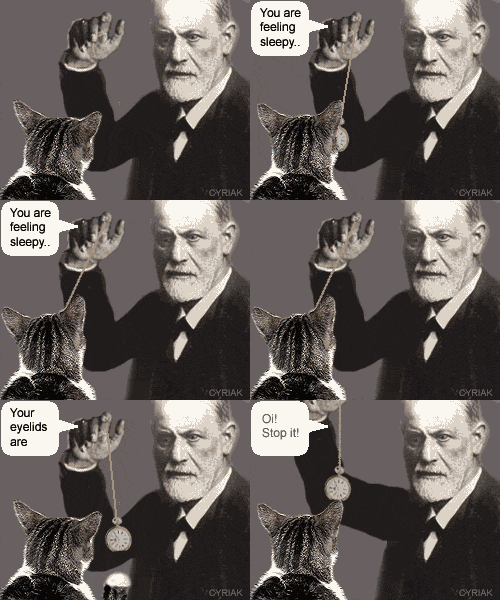
It is based merely on Freud’s theory, which states that it is expected to have a result based on stimuli.
It is developed through stages in a systematic way and ordered by levels of complexity as required by the student body.

Evaluation:
The teacher frequently evaluates his students.
The evaluation focuses on the knowledge and behavior of the student.

Student rol:

The student responds to the external stimuli of the environment.
The student is reactive and not proactive.
It has motivations controlled by the external reinforcements that are provided to the student.

Constructivist approach.

Teaching:
A positive classroom climate is created for the teaching-learning process, fostering the development and autonomy of the student through dialogue, generating an effective learning teaching process.

Learning:

It is generated through dialogue with the teacher in which the student is active in the learning process as it seeks its own knowledge.
Learning does not occur by simple repetition.

Teacher’s role:

The teacher is only a guide for the student that encourages and maintains a climate of interest towards the contents, using various strategies and resources in the teaching-learning process.

Evaluation:

It not only focuses on behaviors or knowledge, but also on the development of people therefore it is a continuous process.

The student:

The student is an active builder of their learning.

Cognitive approach.

Teaching:

It is carried out based on the previous knowledge of the student, focusing on the cognitive and metacognitive strategies of the student, seeking the organization of knowledge and identifying the completion of complete and complex tasks.

Learning:

Learning occurs through the gradual construction of new knowledge. It occurs thanks to the association of knowledge where the student creates a link between previous knowledge and new knowledge.

Role of the Teacher:

The teacher frequently intervenes to see the progress of the student being this a knowledge coach.
It fulfills the role of mediator between the student and the new knowledge.

Evaluation:

Both students’ knowledge and skills are evaluated and can be qualified in two ways: formative and summative.

The feedback focuses on the strategies used as in the construction of knowledge.

Role of the student:

It is active in the learning process.
Build your own knowledge.
He is motivated by his perception of the value of the task also by the control he can have over his success.

Heuristic approach

Teaching:

Promotes the ability of self-management of the student.
It must be done in a playful environment rich in teaching aids.
Use technology tools such as:
A) Simulators and educational games.
B) Exploratory microworlds.
C) Expert systems.
Learning concept:

It is produced from experiences and their own discovery.
It is produced through teacher-student interaction.

Teacher’s role:

It does not directly provide knowledge.
It favors the skills of self-management of the apprentice.
Evaluation concept:

Evaluate cognitive skills as social skills.
Evaluate both student learning and student achievement.
It can be formative and summative.

Role of the student:

Experiment, discover and develop learning.
Be an active entity.
You must come to learning through the experiences you have throughout the activity, unity, etc …

In conclution:

Applying methods will depend on your educational approach and applying techniques will depend on your methods.
It is a phrase that can summarize this entire blog, since, with the information detailed above, we discover that these terms have an enormous relationship if it is about teaching.
Let us also remember that all of them are flexible and it is not law to leave them like that, as teachers, our duty is to experiment, innovate and update the methods, techniques and didactic approaches, so that they are constantly changing and become tedious and hateful as the methods 19th century

I hope this blog has been very helpful.
Remember also that you can leave your opinion and leave a debate in the comment box below.

Categorías
Sin categoría

Learning A Second Language.

This paper describes The Learning Theorie and second language acquisition and fac-tors that affect second language acquisition and the main point of this writing is dis-cussing contributing factors in second language acquisition such as motivation, attitude, age, intelligence, cognitive style, and personality. Some factors are said to be dominant and some others are being equal but each of them gives different contribution for the success or the failure of second language acquisition. It is believed that every normal child, given a normal upbringing, are successful in the acquisition of their first language. However, experience shows that some of them success variedly in acquiring their second language due to the factors influencing the process of second language acquisition.

WHAT IS LEARNING?


Learning means the act, process, or experience of gaining knowledge or skill that brings change in behavior resulted from reinforced practice or experience.
An example of learning is a student understanding and remembering what they’ve been taught.

THEORIES OF LEARNING

Behaviorism: Current of Psychology that fervently defends the idea of the scientific method, because in itself this school is purely scientific and part thanks to the Wundt base that brings science back to the psychological field. The greatest exponents of this current are Messrs. Pavlov, Watson and Skinner, the object of study that this school possesses, clearly the behavior of individuals in a stimulus and response environment, since they see this aspect because it is measurable.

Is based on the idea that knowledge is independent and outside the student. In the mind of a behaviorist, the student is a blank board that should receive the information he must learn. Behaviorism involves repeated actions, verbal reinforcement and incentives to participate. It is excellent for setting rules, especially for behavior management.

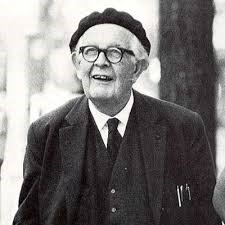
Cognitivism: Piaget’s theory of cognitive development explains how a child constructs a mental model of the world. He disagreed with the idea that intelligence was a fixed trait, and regarded cognitive development as a process which occurs due to biological maturation and interaction with the environment

Unlike behaviorism, cognitivism focuses on the idea that students process the information they receive instead of simply responding to a stimulus, as with behaviorism. In the theory of cognitivism, learning occurs when the student reorganizes the information, either finding new explanations or adapting old ones.

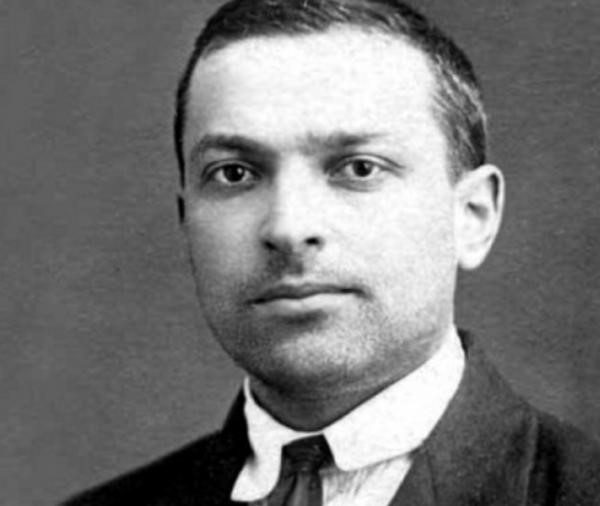
Constructivism: Lev Vygotsky is considered the precursor of social constructivism. From it, various social conceptions about learning have developed. Some of them broaden or modify their postulates, but the essence of the social constructivist approach remains.

Constructivism is based on the premise that we build the learning of new ideas based on our own knowledge and previous experiences. Students need to have a prior knowledge base for constructivist approaches to be effective.

Connectivism: George Siemens and Stephen Downes developed a theory for the digital age, called connectivism, denouncing boundaries of behaviorism, cognitivism, and constructivism. Their proposed learning theory has issued a debate over whether it is a learning theory or instructional theory or merely a pedagogical view.

It is a theoretical framework for understanding learning in a digital age. Emphasize how Internet technologies, such as web browsers, search engines, wikis, online discussion forums and social networks, contributed to new learning avenues.

Learn a Second Language refers to:

the process by which people learn a second language. Second-language acquisition is also the scientific discipline devoted to studying that process. The field of second-language acquisition is a sub discipline of applied linguistics, but also receives research attention from a variety of other disciplines, such as psychology and education.

FACTORS INFLUENCE SECOND LANGUAGE.


• Motivation: It is an important factor that can greatly influence the achievement of the acquisition of a second language or a foreign language by students.
• Motivation comes in two forms; integrative or instrumental

Integrative: The student studies a language because he is interested in the people and culture of the target language or in order to communicate with people from another culture who speak it.

Instrumental: A student’s goals for learning the second idiom indicators are functional and useful, for example, need the language to get a better job, pass exams.

• First language experiences: Indicates that native language skills can influence the acquisition of the second language. Vocabulary, pronunciation, and grammar, as well as language structure and use.

Learners who have acquired general know ledge and experience are in a strong position to develop a new language than these who haven’t. The student, for example: Who has already lived in 3 different countries and been exposed to various language and cultures has a stronger base for learning a further language than the student who hasn’t had such experiences.
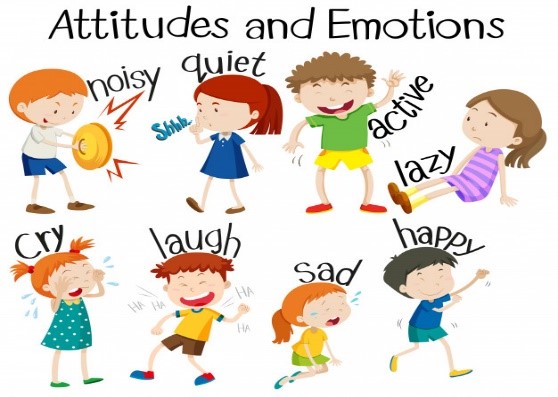
• Language distance and attitude: are the attitude which speakers or different language have toward other’s language or to their own language. Expression of positive or negative feelings toward a language may reflect impression of linguistic difficulty or simplify, ease or difficulty of learning, degrees of important, social status, etc. It is obvious that learners who have positive attitudes learn more, but also learners who Lear well acquire positive attitudes.

• Access to the language: Access to the language allows people with limited English proficiency to use the technology services such as programs, applications, books or classes to learn the English language.

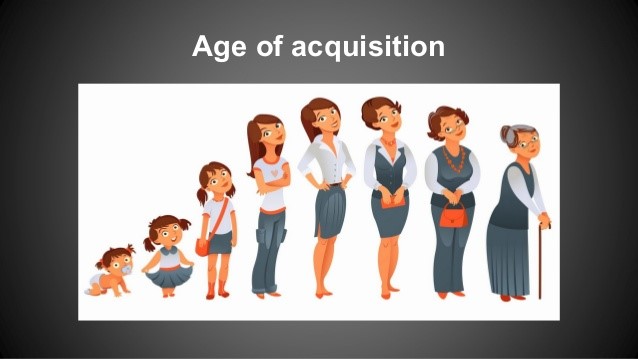
• Age of acquisition: It is generally believed that children are better at language acquisition that adults. However, only the studies conducted in naturalistic learning setting provide that evidence that supports this assumption.

Personality and learning styles:


Personality has been described as set of features that characterize and individual. Some of them have been found as benefits while the others as an obstacle in learning a second language. The most important personality factors are: Introversion/extroversion, self-esteem, risk-taking, anxiety and empathy.
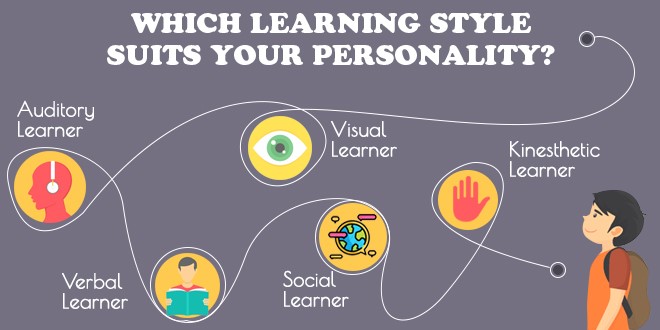
Learning Styles: It is particular way in which a learners tries to learn something. Some learners may what explanations for grammatical rules (audio learners), some may feel writing down words and sentences help them to remember (kinesthetic learners).

• Peers and Role Models: Peer interaction can facilitate acquisition in role plays and discussion tasks, peer interaction can be defined as “any communicative activity carried out between learners, where there is minimal or no participation from the teacher”.
The role models can have a considerable influence on the configuration of people’s values, attitudes and beliefs.
Example: many take as a model to follow its teachers in this case it would be a teacher of English that motivates them to learn the language through his experience.

• Quality of instruction: The quality of foreign language teaching is influenced not only by the knowledge of the language and the method of the teacher, but also by the understanding of modern trends that help the appropriate practical changes. Means that the teacher can effectively engage students in the learning process and relay relevant knowledge.

IN CONCLUTION

Learning a second language is a complex process because it requires not only learning grammar structures and acquiring vocabulary but also developing communication skills and an awareness of another culture. For example: Learning English has become a mandatory skill that many people should have. There are many reasons why people decide to study English as a second language, for example: to improve their financial situation, travel around the world, work abroad, communicate with people from different countries, etc. It is very common to see people from different ages enrolling in academies and universities which offer an enticing academic program designed to fulfill the students‟ necessities.

Thanks for reading this blog, remember that you have a comment box where you can leave your opinions and generate a discussion.

Diseña un sitio como este con WordPress.com
Comenzar